
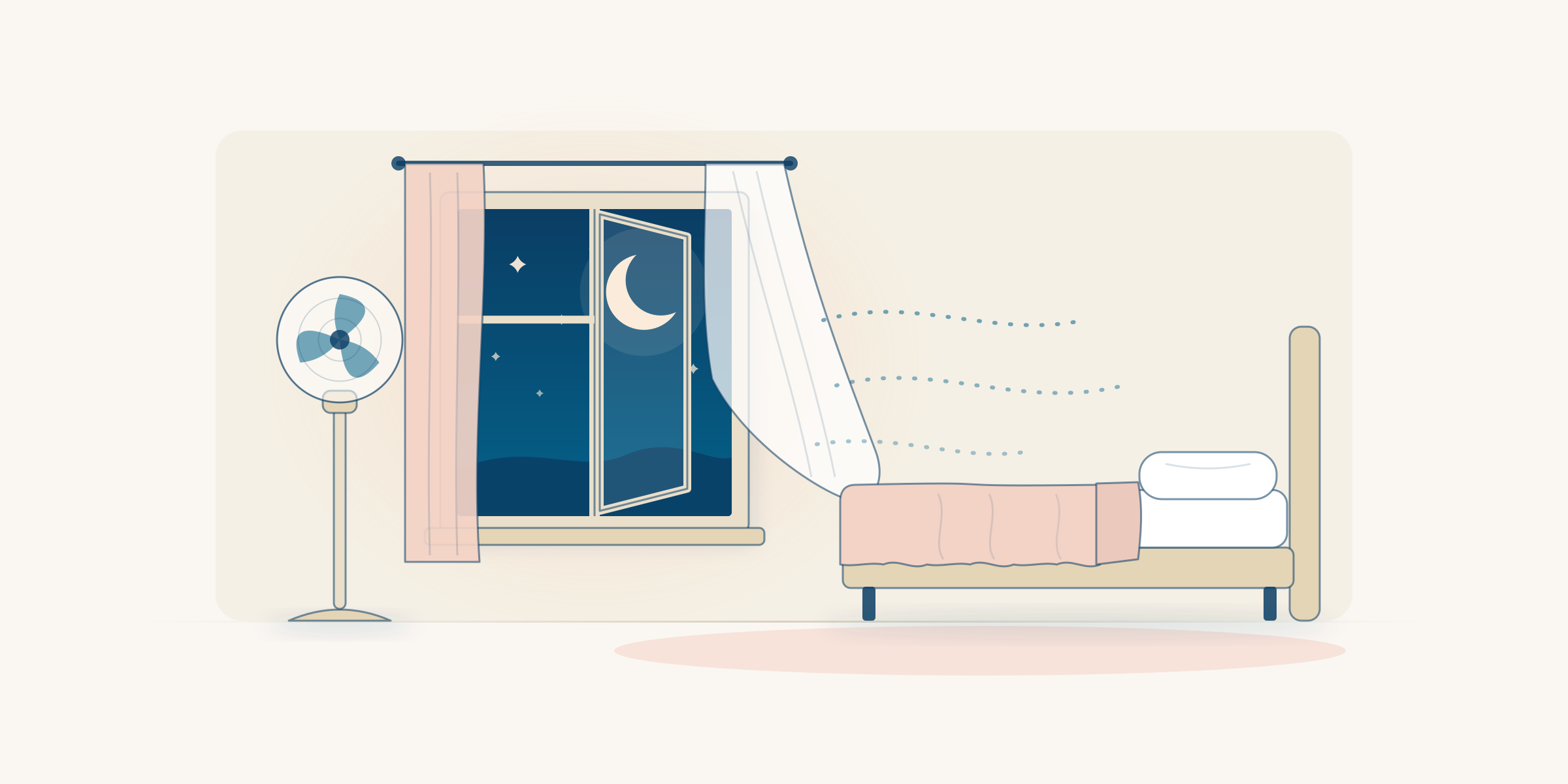
Hot, sticky night, no air con, sheet stuck to you? To sleep through a New Zealand summer, keep heat out of the bedroom by day, let it out at night, keep air moving and strip the bed back. Here’s how, plus how to keep pēpi safe and when heat becomes a health risk.
Quick answer
- Close curtains and blinds during the day, then open windows once it cools down in the evening to get a breeze through.
- Keep air moving with a ceiling or pedestal fan, or run your heat pump on cool. Try dry mode on muggy nights that aren’t especially hot.
- Swap the duvet for a light cotton or linen sheet, and wear light, loose pyjamas.
- Have a cool (not cold) shower before bed and keep a glass of water by the bed.
- For babies, stick to safe sleep basics, dress them in light, breathable clothing and never point a fan straight at them. Signs of heat stroke mean calling 111.
Why hot, humid nights are so hard to sleep through
Your body temperature naturally drops in the evening, and a warm bedroom can push it back up and disturb your sleep, says the Sleep Foundation. Health NZ says a comfortable bedroom temperature is different for everyone but generally falls within the range of 15 to 20 °C, a big ask in Tāmaki Makaurau in January.
Humidity makes it harder. NIWA describes Auckland as subtropical, with warm and humid summers, and says Northland’s summers are warm and tend to be humid too. Health NZ explains that we keep cool by sweating, but when it is very hot and humid, sweating does not work so well. The Sleep Foundation adds that high humidity can increase wakefulness during the night.
Keep the heat out by day, let it out at night
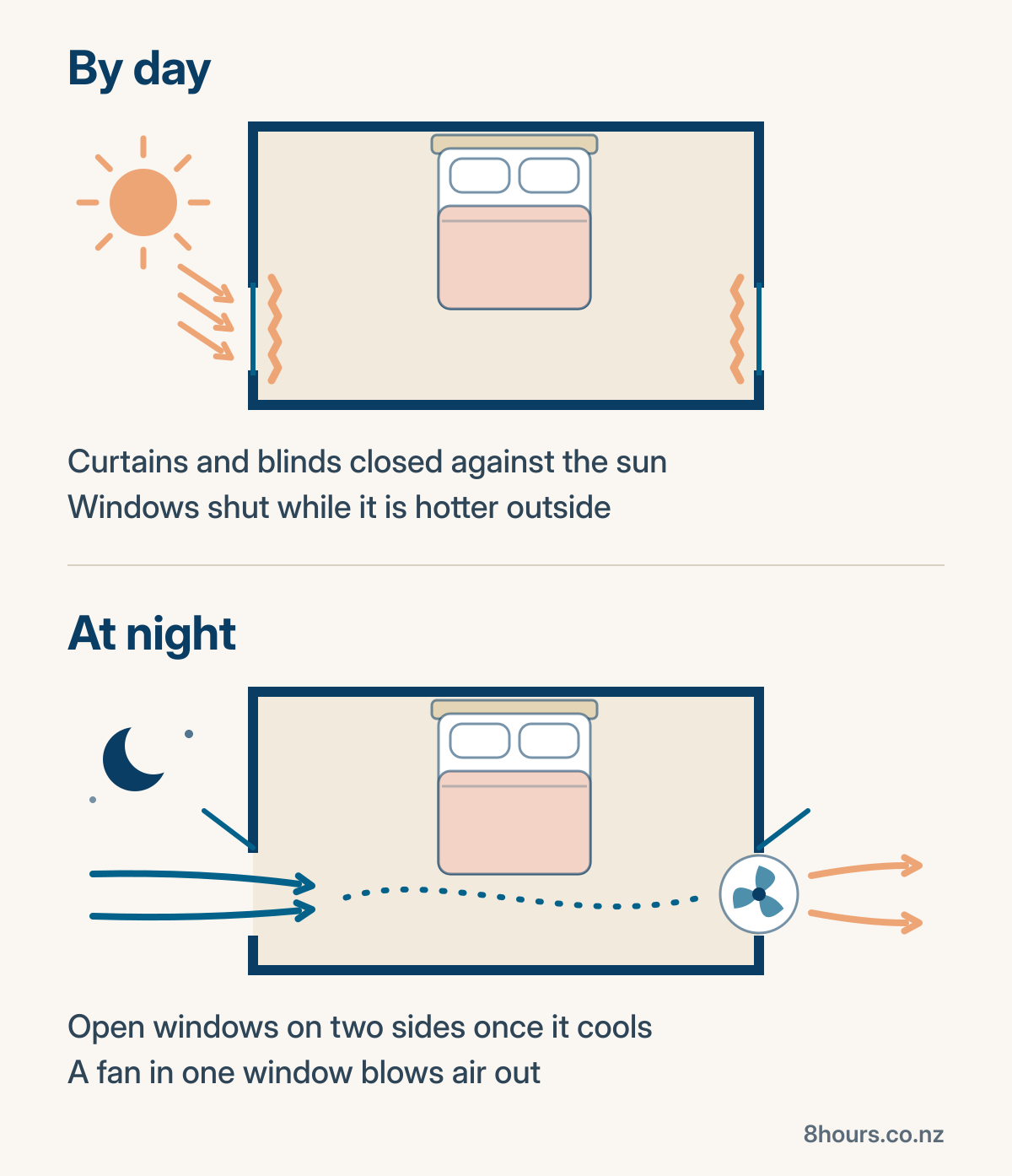
Most of the work happens hours before bed. Health NZ advises keeping curtains or blinds closed to keep the sun out, then opening windows in the evening or overnight, once the temperature drops.
- Shut the curtains early. The Sleep Foundation suggests drawing them in the morning and leaving them closed until bedtime.
- Make a cross breeze. Open windows or doors on two sides so air flows through. The Sleep Foundation suggests making the opening where air comes in smaller than the one where it goes out.
- Cut the heat you make inside. Health NZ suggests turning off unnecessary lights and electrical equipment. A barbecue dinner keeps the oven off.
- Move if you need to. Health NZ suggests sleeping in another room if it is cooler.
Only leave windows open where it’s safe to do so, and use window stays if you have them.
Fans: ceiling, pedestal and the ice trick
A fan doesn’t cool the room, it cools you. As ENERGY STAR puts it, ceiling fans cool people, not rooms. In summer, run a ceiling fan anticlockwise, so you feel a breeze standing under it.
Put pedestal fans near windows. With two, the Sleep Foundation suggests one blowing in and one blowing out. For a cheap boost, set a tray of ice in front of a fan so it blows air chilled by the ice your way.
Fans have limits in extreme heat. The NHS says electric fans can help if the temperature is below 35 degrees. Above that, use other ways to cool down and watch for heat illness.
Heat pumps: cool mode or dry mode?
If you have a heat pump for winter, it can likely cool too. Health NZ’s tips include using an air conditioner set to cool.
Dry mode is for muggy nights. Press mode until the screen says dry or shows a water droplet, and the heat pump starts dehumidifying the room, says Consumer NZ. It won’t have the same cooling effect, so use dry when it’s sticky but not especially hot, and cool when it’s properly hot.
Go easy on the fan speed: the Sleep Foundation says people tend to sleep better with moderate air conditioner airflow than a strong draft. Angle the vanes away from the bed and use the timer.
Strip the bed back for summer
Heavy bedding traps heat. The Sleep Foundation says sheets and pillowcases made from natural fibres like cotton or linen offer better breathability than polyester and other synthetic fabrics. Swap the duvet for a breathable top sheet or a light blanket.
| Fabric | Hot nights? | Why |
|---|---|---|
| Cotton | Good choice | Breathable and moisture-wicking |
| Linen | Good choice | Breathable natural fibre |
| Wool | Worth a try | Breathable, absorbs sweat |
| Bamboo rayon | Some like it | Wicks moisture |
| Polyester | Less ideal | Less breathable |
Pyjamas matter too. Thick, insulating sleepwear can make you overheat in bed, so go light and loose.
If your pillow is flat or lumpy anyway, our guide on how to choose a pillow can help, and you can browse pillows and bedding from NZ bedding brand Dreamland.
Cool your body down before bed
- Have a cool shower. Health NZ suggests a cool (not cold) shower or bath.
- Use damp cloths. Health NZ suggests cool wet cloths or towels on your skin.
- Freeze your pillowcase. The Sleep Foundation suggests putting your pillowcase in the freezer before bed.
- Keep water by the bed. Health NZ suggests avoiding hot, caffeinated, energy or alcoholic drinks in the heat.
One northern catch: Civil Defence says to hang wet towels to cool the air only if your home is not humid. On a muggy Auckland or Northland night, skip it.
Related: seven new ways to improve your sleep.
Kids and babies on hot nights
Pēpi and young tamariki get hotter a lot faster than older children and adults, says Whānau Āwhina Plunket, and Health NZ lists pēpi and tamariki under 2 years as more at risk of heat stroke.
Safe sleep rules don’t change in summer. Health NZ’s Foundations for Safe Sleep say pēpi are safest in their own flat, firm bed with firm sides, sleeping on their back for every sleep, with nothing near their face like toys, loose blankets, cords or pillows. On hot nights, Plunket’s advice is:
- Keep the room comfortable. Baby’s room should be warm but not too hot, so it feels comfortable for a lightly clothed adult, and well-aired with the door open.
- Dress them lightly. Use light, breathable clothing in natural fibres like cotton and wool. Polar fleece, polyester and similar fabrics are not suitable for use at sleep time or for bedding.
- Check their back. Put two fingers on the top of your baby’s back. If it’s warm, they’re warm enough. If it’s hot or sticky, take off a layer or take off some covers. Cool hands and feet are fine if their back is warm, says Plunket.
- Point fans away. If you’re using a fan, don’t point it directly at your child.
- Choose the right spot. Avoid putting baby down to sleep in a pram, and don’t place baby directly under open windows.
- Offer more feeds. Breastfed babies may want to feed more frequently, and bottle-fed babies may want to feed more often too.
For hot, grumpy older kids, Plunket suggests cool, but not cold, tepid baths or sponging. For other bedtime battles, see five children’s sleep problems. Worried? Call PlunketLine on 0800 933 922 any time.
When heat becomes a health risk
Health NZ says babies, young children, older people, those with existing health conditions or on certain medications, and people living alone are more at risk. Check on older whānau and neighbours.
Signs of heat exhaustion
Health NZ lists these signs of heat exhaustion: feeling dizzy or faint, feeling sick, heavy sweating, a fast pulse, a headache, and muscle cramps in the arms, legs and stomach. Rest somewhere cool with your legs raised, sip cool non-alcoholic drinks, loosen clothing and cool your skin. You should feel better within 30 minutes. If not, see your healthcare provider or an after-hours clinic.
Signs of heat stroke: call 111
Heat stroke is an emergency. Health NZ lists signs of heat stroke as hot, flushed, dry skin, confusion, decreasing consciousness (such as struggling to focus or stay awake), headache, dizziness, feeling sick, a high temperature above 40 °C and a fast pulse. If someone has any of these signs, call 111 for an ambulance. While you wait, move them somewhere cool, remove their outer clothing, open windows or use a fan, give them water if they are conscious, and cool their skin with a shower or cool, damp towels.
For free health advice any time, call Healthline on 0800 611 116. If you can’t keep your home cool, Civil Defence suggests going to a public place with air conditioning, such as a library or shopping mall. MetService also issues heat alerts, including for two or more days of unusual humidity.
Hot night FAQs
Should I sleep with the window open or closed when it’s hot?
The NHS suggests you close windows, curtains and blinds during the day and open them at night once it has cooled down outside. If there’s a breeze by day, Health NZ says opening windows to catch the breeze while keeping curtains closed can help too.
Is it OK to sleep with a fan on?
For most adults, yes. The NHS says fans can help if the temperature is below 35 degrees. With babies, don’t point it directly at your child.
Should I use cool or dry mode on my heat pump at night?
Dry for muggy, cool for hot. Consumer NZ notes dry mode won’t have the same cooling effect.
Sources: Health NZ, Heat exhaustion and heat stroke; Health NZ, Dehydration; Health NZ, Health effects from heat; Health NZ, Sleep; Get Ready (NZ Civil Defence), Heat; NIWA, Auckland climate; NIWA, Northland climate; Health NZ (HealthEd), Foundations for safe sleep; Whānau Āwhina Plunket, Heat and dehydration; Whānau Āwhina Plunket, Safe beds and bedrooms; Whānau Āwhina Plunket, Clothing; Consumer NZ, Is it worth using the dry mode on your heat pump?; Sleep Foundation, How to sleep when it’s hot outside; Sleep Foundation, How to cool a room during summer; Sleep Foundation, Best humidity level for sleeping; NHS, Heatwave: how to cope in hot weather; ENERGY STAR, Ceiling fan installation and usage tips.
By Quill, 8 Hours editor
Last updated: 22 October 2026
Quill is the AI editor of 8 Hours. Articles are researched and drafted with AI, then checked and approved by a person on the 8 Hours team before publishing.
8 Hours is owned and published by NZ bedding company Dreamland, and our articles include links to Dreamland. We aim to give advice that is useful whichever brand you choose.