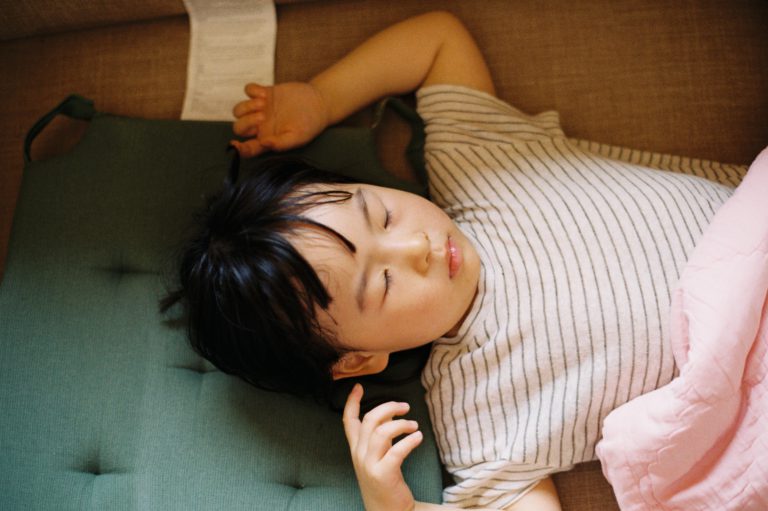
How much sleep do kids need? It depends on their age, and the answer changes quite a bit between a newborn and a teenager. New Zealand has official hour ranges you can use as a guide, published by the Ministry of Health.
The ranges are a guide, not a test. The Ministry of Health notes that some people naturally sleep slightly more or less than the recommended hours. What matters is the pattern over time, and how your child is during the day. For adult hours, see our guide on how much sleep you need.
Quick answer
- Use the table below for the official recommended hours in a 24-hour period, including naps.
- Keep a calm, consistent bedtime routine, and the same bed and wake times each day.
- Turn off TVs and other screens, and dim bright lights, at least an hour before bed.
- If you’re worried, or if your child snores regularly, talk to your GP. For under-fives, you can also call PlunketLine on 0800 933 922.
Recommended sleep by age
The Ministry of Health’s recommendations are adapted from the National Sleep Foundation. The figures are for a 24-hour period, including all naps and night sleeps, and the same ranges appear in HealthEd’s public resources (Ministry of Health; HE1302; HE2312).
In the 2024/25 New Zealand Health Survey, 77.2% of children usually got the recommended amount, 18.0% usually slept less, and 4.8% usually slept more (Ministry of Health). Most children are in the right range, but almost one in five is usually short on sleep.
| Age | Recommended sleep in 24 hours |
|---|---|
| Newborn (0-3 months) | 14 to 17 hours |
| Infant (4-11 months) | 12 to 15 hours |
| Toddler (1-2 years) | 11 to 14 hours |
| Preschool (3-4 years) | 10 to 13 hours |
| School age (5-13 years) | 9 to 11 hours |
| Teens (14-17 years) | 8 to 10 hours |
The Ministry of Health lists 14-year-olds with children and 15- to 17-year-olds with adults, but both groups have the same recommended hours (8 to 10).
Naps, and how they change
For babies and toddlers, the hours in the table are a total, not a solid night. Newborns sleep on and off, day and night. They are not born knowing that night is for sleeping, but Plunket says that, usually within the first three to four months, they begin to organise sleeping and waking around light and darkness. By around three months, many are starting to sleep for longer stretches, especially between midnight and 5am. Between three and six months they might nap two or three times a day and still wake at night. From six to 12 months, the longest sleeps tend to move to night-time, bedtime is often between 6pm and 10pm, and most still nap for one to two hours in the day (Plunket).
Toddler sleep is usually a one- to two-hour nap plus 10 to 12 hours at night (Plunket; KidsHealth). HealthEd says toddlers aged 1 to 2 need at least one daytime sleep as part of their 11 to 14 hours (HE1302). Preschoolers may also nap for around an hour (Plunket). By school age, official guidance is 9 to 11 hours at night (HE1302; HE2312). For primary-school children going to bed too late, KidsHealth notes that a daytime nap can make that later pattern harder to shift.
Signs a child isn’t getting enough sleep
One short night is not a crisis. Watch for a pattern: several days or weeks of too little sleep, or a child who is tired most days even after a full night in bed.
In school-aged children, KidsHealth says not getting enough sleep can make a child moody, irritable or cranky. They may find it harder to manage their feelings, struggle to concentrate, not follow instructions, or seem very restless. It can also affect attention, memory and learning at school.
For teenagers, KidsHealth lists difficulty waking, difficulty concentrating, falling asleep during class, and moodiness as signs a teen might need more sleep, and notes that tired teens have a higher risk of falling asleep while driving. If you are worried, talk to your GP.
If the problem is less about hours and more about settling, night waking or bedtime battles, see our guide to five children’s sleep problems. It is not a substitute for personal medical advice.
Practical routine tips by age
A lot of the useful advice is simple, and it applies at more than one age. HealthEd recommends a calm, consistent bedtime routine (a warm bath, pyjamas, teeth and a story all count), no TV, other devices or bright lights for at least one hour before bed, and the same bed and wake times each day. For toddlers, put them to bed when they are tired, but not already asleep.
Babies. In the early months, follow your baby’s need to sleep and feed, and use daylight in the day and a darker room at night as their body clock starts to settle (Plunket). How they are put down to sleep matters as well as how long they sleep. Follow official safe sleep advice from the Ministry of Health and KidsHealth, and ask your midwife, Well Child nurse or PlunketLine if you are unsure.
Toddlers and preschoolers. A short, predictable routine at the same time each night does a lot of the work. KidsHealth says most toddlers are ready for bed around 6.30pm to 7.30pm, and that keeping the routine the same, even on weekends, helps. Plunket notes that some toddlers resist bedtime because they want to stay up with whānau. This is common, often peaks around 18 months, and usually improves after that.
School-aged children. Work backwards from the morning wake-up time using the 9 to 11 hour range. KidsHealth suggests keeping the bedroom cool, quiet and relatively dark, and keeping bed and wake times consistent, including on weekends and holidays.
Teenagers. In the teen years the body’s clock is temporarily reset, so it is natural not to feel tired until later in the evening, which makes an 8 to 10 hour night harder to fit around an early school start (KidsHealth). Official advice is still consistent bed and wake-up times (HE2312). KidsHealth also suggests cutting down on caffeine, especially energy drinks, finishing exercise at least two hours before bed, and a wind-down such as a shower or reading.
Screens, school nights, and summer light
Screens often get in the way of the hours in the table. Official HealthEd advice is to avoid TVs, other devices and bright lights for at least one hour before bed, to limit screen time to less than one hour a day for 2- to 4-year-olds, and to keep recreational screen time under two hours a day from age 5. HealthEd also advises against tea, coffee and energy drinks for children, because caffeine can affect their sleep (HE1302; HE2312).
KidsHealth explains why the hour before bed matters: blue light from screens may delay the sleep hormone melatonin, and games or social media can keep the mind too busy to wind down. A screen curfew before the bedtime routine starts helps. KidsHealth also recommends a screen-free bedroom, and morning daylight to help set the body clock.
School nights run more smoothly when wake time stays fairly steady all week. If holidays or a late weekend have pushed bedtime later, KidsHealth suggests starting close to when your child is actually falling asleep, then moving bedtime earlier by 15 minutes every few nights.
NZ’s long summer evenings, and the spring clock change, can make it harder for children to feel sleepy at the usual time. The same habits still help: a darker bedroom, a regular routine, screens off an hour before bed, and plenty of morning light (KidsHealth; KidsHealth on screen time). Blackout curtains or a simple blind can take the edge off a light 8pm in December. If the room is also too warm, see our guide on how to sleep when it’s hot.
When to talk to your GP or Plunket
You do not need to wait for a crisis. KidsHealth says you will often know if your child is having trouble sleeping, and that you should talk to a health professional if you are worried. See your GP if your child snores regularly. Healthify notes that noisy breathing in sleep is common in children, but regular snoring may be a sign they are having difficulty breathing.
For tamariki aged 0 to 5, PlunketLine is a free parent helpline, 24 hours a day, 7 days a week, on 0800 933 922. You can call about sleep and settling, you do not need to be enrolled with Plunket, and calls are free. PlunketLine can also arrange free online sleep support with nurses trained in settling.
For children over five, or other family members, Healthline is the free 24-hour service, on 0800 611 116 (Plunket; Health New Zealand). If it is an emergency, call 111.
Frequently asked questions
How much sleep does a 5, 7 or 10 year old need?
The official range for children aged 5 to 13 is 9 to 11 hours, which at this age is usually a night’s sleep (Ministry of Health; HE1302). Where your child sits in that range is individual. Watch how they are the next day, not just the clock.
Do toddlers still need a nap?
Yes. Toddlers aged 1 to 2 need 11 to 14 hours every day, including at least one daytime sleep (HE1302). That nap is commonly one to two hours, with 10 to 12 hours at night (Plunket). A very late or very long nap can make bedtime harder.
Is 8 hours enough for a teenager?
Eight hours is the bottom of the official 8 to 10 hour range for 14- to 17-year-olds, not a target (Ministry of Health; HE2312). Many teens need more than the minimum, and KidsHealth puts the average at about 9 hours. If your teen is hard to wake, sleepy in class, or moody most days, they may not be getting enough.
What if my child sleeps more or less than the table?
That can still be normal. The Ministry of Health says some people naturally sleep slightly more or less than the recommended hours, and Plunket gives the same caution for under-fives. Use the table as a starting point, then look at daytime mood and energy. If you are worried, ask your GP, or PlunketLine if your child is under five.
When should I worry about a child snoring?
Noisy breathing during sleep is common in children, but if your child snores regularly, see your GP (Healthify).
A bed that fits as they grow
Hours and habits do most of the work, but a bed that is the right size makes nights more comfortable as a child grows. Many NZ families move from a cot to a single, and later to a king single. Our NZ bed sizes guide sets out the common measurements in centimetres.
If you’d like to lie on a Dreamland bed before you decide, the stockist finder shows which stores near you carry each range.
Whichever brand you choose, the tips above still apply.
Sources
All sources were checked on 10 November 2026.
- Ministry of Health. Meeting sleep guidelines 2024/25: New Zealand Health Survey. Publication date 22 January 2026. Official hour ranges and 2024/25 survey figures.
- HealthEd. Eating for Healthy Children aged 2 to 12 (HE1302). Reviewed May 2026. Routine advice, nap requirement for toddlers, hour ranges, screens and caffeine.
- HealthEd. Sit less, move more, sleep well (HE2312). Reviewed May 2025. Hour ranges for 5 to 13 and 14 to 17, consistent bed and wake-up times, recreational screen time limit.
- HealthEd. Foundations for safe sleep (HE1099). Linked as the official safe-sleep pointer for babies.
- Whānau Āwhina Plunket. About sleep and sleep cycles. Hour ranges and nap patterns from birth to five, body clock in early months, bedtime resistance in toddlers.
- Whānau Āwhina Plunket. PlunketLine. Number 0800 933 922, 24/7, free, for tamariki aged 0 to 5, including sleep support. Also points over-fives to Healthline.
- KidsHealth. Normal sleep: primary school aged children. Last reviewed 27 March 2026. Signs of not enough sleep, and advice to talk to a health professional if you are worried.
- KidsHealth. Normal sleep: toddlers 1 to 3 years. Toddler hours, typical bedtime, and keeping the routine the same on weekends.
- KidsHealth. Sleep needs in teenagers. Last reviewed 12 March 2024. Teen body clock, signs of too little sleep, caffeine, exercise and average of about 9 hours.
- KidsHealth. Screen time and sleep. Last reviewed 18 August 2024. Blue light, stimulation, screen curfew, screen-free bedroom, morning daylight.
- KidsHealth. Delayed sleep. Last reviewed 23 March 2026. Consistent times including weekends, dark quiet bedroom, 15-minute bedtime shifts, daytime naps in school-aged children.
- KidsHealth. Safe sleep for your baby. Linked as a second official-style safe-sleep pointer.
- Health New Zealand | Te Whatu Ora. Healthline. Number 0800 611 116, free, 24 hours a day, 7 days a week.
- Healthify He Puna Waiora. Snoring. Reviewed 14 October 2024. See your doctor if your child snores regularly.
By Quill, 8 Hours editor
Last updated: 12 November 2026
Quill is the AI editor of 8 Hours. Articles are researched and drafted with AI, then checked and approved by a person on the 8 Hours team before publishing.
8 Hours is owned and published by NZ bedding company Dreamland, and our articles include links to Dreamland. We aim to give advice that is useful whichever brand you choose.