When family stay over at Christmas, or friends visit for a summer weekend, the spare room (or the lounge floor) suddenly matters. A good spare bed for guests is less about a perfect setup, and more about a few practical choices: who is staying, for how long, and what you already have in the house.
Quick answer
An air mattress can be fine for a night or two, especially if you inflate it fully, put it on a clean, even surface, and add extra bedding. For a longer stay, or for older guests, a proper bed with a supportive mattress is usually the kinder option.
If you have a spare room, start with a proper bed at a comfortable height, fresh sheets, and decent pillows. If you do not, a sofa bed, trundler or folding bed can work for a short visit. Avoid leaving a mattress on the floor for more than a night if you can help it. There is no single best type of mattress for every guest, so if you are buying one, try it in a store and choose what feels supportive to you.
This article does not review brands, and it does not recommend a firmness level.
Why this comes up in a NZ summer
Christmas and the summer holidays are when a lot of New Zealand homes take extra people. Some guests get a spare room. Others get the lounge, a sleepout, or a blow-up mattress in the kids’ room. That is normal, and it does not have to mean a terrible night.
The useful question is not “what is the best guest bed”. It is “what will get this person through this stay reasonably well”. A teenager on a one-night sleepover has different needs from grandparents staying a week. A couple sharing a sofa bed for two nights is a different job from a friend who will be with you until mid-January.
If you need to buy something, it is worth sorting it earlier rather than the week before Christmas. Delivery can get busy in December. This article will not tell you what to buy, or from whom. It will help you match the option to the stay.
Air mattresses: when they will do
An air mattress is often the quickest way to make a spare bed for guests when you have no spare room, or when the stay is short. For a night or two, that can be a perfectly decent solution.
A few practical steps make it more comfortable:
- Put it on a clean, even floor, away from sharp edges and heaters.
- Inflate it fully, then check it again before bedtime, because some slowly lose air.
- Add a mattress topper or a folded blanket on top, plus proper sheets and a pillow. Extra bedding underneath can also help it feel less thin.
- Give your guest space to get up safely in the night, and a lamp or a clear path to the bathroom.
An air mattress is still a temporary bed. If someone will be with you for a week, or if they tell you it feels unsupportive, it may not be the right option for the whole stay. That is not a medical judgement. It is a practical one. Do not treat an air mattress as a long-term replacement for a proper bed.
This is also not a review of inflatable brands. Comfort varies, and the same mattress can feel fine to one person and miserable to another.
Sofa beds, trundlers, folding beds and wall beds
If the lounge or study has to work as a bedroom for a few nights, these are the options most New Zealand homes use.
- Trundler. Usually a king single with a single mattress underneath that rolls out, and on some models lifts up to the same height. It is popular in kids’ rooms and studies because you get two beds in the space of one.
- Sofa bed. Some fold the backrest down flat, some foam sofas simply unfold, and some roll or pull out into a bigger sleeping surface. Others hide a fold-up spring mattress inside.
- Folding bed. A fold-up bed on a frame that folds in half and stands up to put away.
- Folding foam mattress. It folds into sections and stores in a cupboard. It is fine for kids and short stays, but it sits on the floor.
- Wall bed. It folds up against the wall when it is not in use, and is sometimes called a hideaway or Murphy bed. Wall beds are becoming more common in smaller homes and home offices. They are a bigger purchase and need to be fixed to the wall properly.
Comfort varies a lot within each type. Some are comfortable enough for a short stay. Others feel like sleeping on the frame.
If you already have one, try it yourself for a night before guests arrive. You will find out quickly whether the mattress feels thin, whether it is awkward to get in and out of, and whether it leaves enough room in the morning to put the room back together. If you are thinking of buying one, the same rule applies: sit and lie on it in the store, rather than guessing from a photo.
Stretcher beds and camping mattresses can also cover a short, informal stay, especially for younger guests. They are not a good default for a longer visit, or for anyone who finds a very low bed hard to get out of.
Dreamland makes trundler beds, sold through New Zealand retailers. None of the other options here is a Dreamland product.
Setting up a proper spare bed
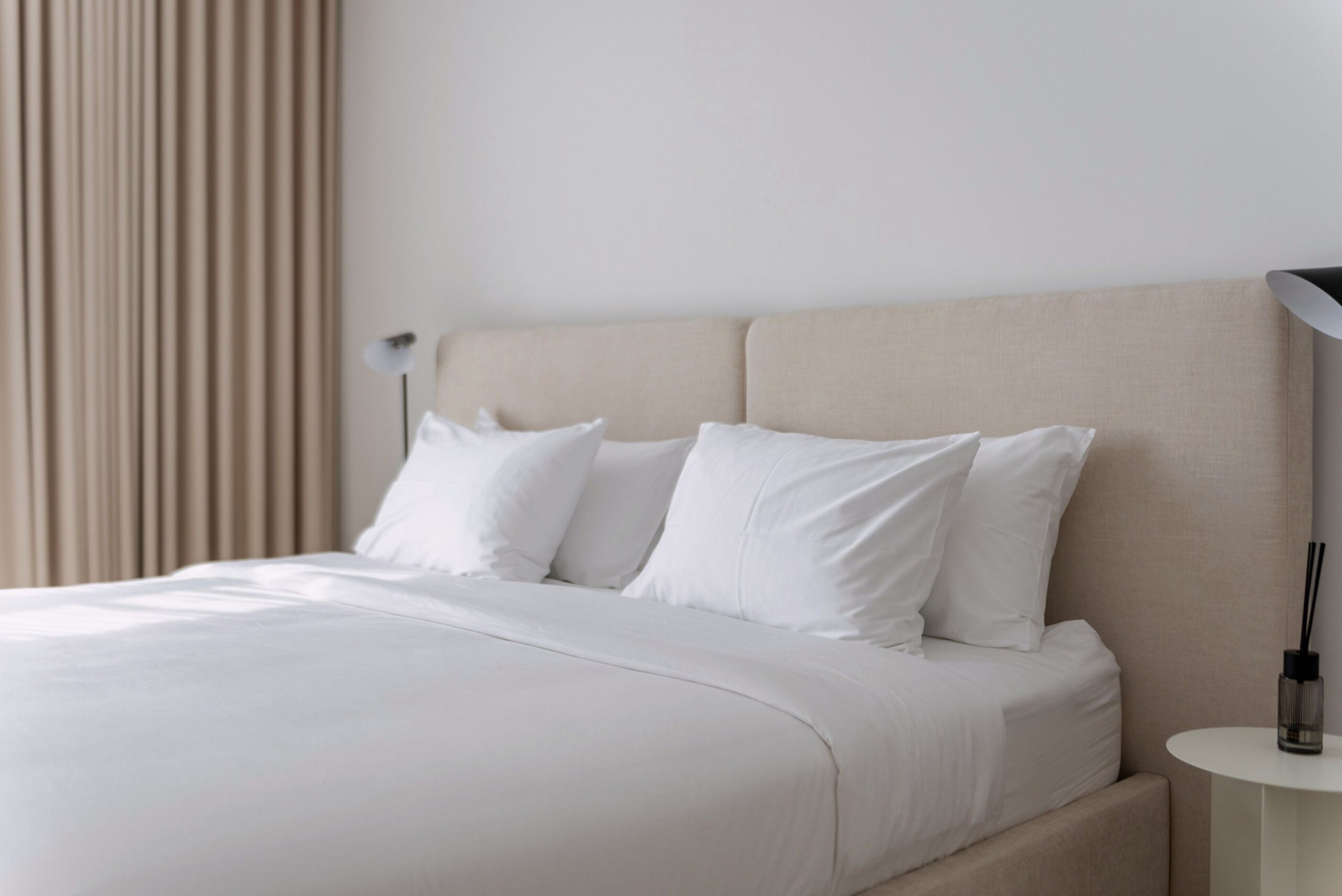
If you have a room you can give over, a proper bed is usually the most comfortable spare bed for guests, especially for adults staying more than a night or two.
Healthify suggests having a good supportive mattress and pillows, and changing the sheets and pillow cases regularly, because a fresh bed is more inviting. That is simple, useful advice for a spare room: wash the bedding, air the room, and make the bed before people arrive.
Healthify’s page on damp and mouldy homes also says to lift mattresses off the floor onto a bed base. If a mattress has to be on the floor, lift it up to air it during the day. That is worth doing in a spare room that is only used now and then, and it is a reason not to leave a guest on a floor mattress for the whole holiday if you have another option.
For size, use our NZ bed sizes guide. A double or queen often works well in a spare room if the room can take it. A single or king single can be enough for one person. Measure the room, including space to walk around the bed and open the door, before you buy.
If you are buying a mattress, Consumer NZ makes a useful general point: there is no evidence that any one type of mattress is better than another, and comfort is individual, so you need to find one that works for you. That is why this article does not recommend a firmness level, a material, or a brand. If you can, lie on a few mattresses in a store, and take your time.
Consumer NZ also notes that a bed that is too low or too high can be hard to get into and out of. When you sit on the edge, your feet should reach the ground comfortably, and you should not need much effort to stand. That matters for older guests. It is a height and ease-of-use point, not a treatment claim.
If the spare mattress you already have is worn, sagging, or well past its best, see our guide to signs you need a new mattress. For pillows, our guide to choosing a pillow may help if the spare ones are flat or musty.
If you’d like to lie on a Dreamland bed before you decide, the stockist finder shows which stores near you carry each range. Whichever brand you choose, the tips above still apply.
Helping guests actually sleep
The bed is only part of the stay. Healthify’s sleep tips also suggest preparing the room: curtains or blinds thick enough to keep out the light, and a slightly cool temperature. In a New Zealand summer, both can be hard, especially in a spare room that gets the afternoon sun, or in a lounge that is still a living room at 10pm.
For hot nights, our guide to sleeping when it is hot has practical steps you can use in a guest room as well as in your own. A darker room, a working lamp, a clear path to the bathroom, and a bit of quiet after the house has gone to bed will do more for most guests than a new throw cushion.
If children are staying, our guide to how much sleep kids need is a useful reminder of usual hours by age, and of keeping the routine as steady as you reasonably can. You will not reproduce a child’s own bedroom perfectly, and you do not need to.
If your visitors have just flown in from overseas, our guide to jet lag from NZ may also help, especially in the first days after they land.
Frequently asked questions
Is an air mattress all right for a week?
It can get someone through a short stay, but it is a temporary option. If the visit is longer, or if the person says it feels unsupportive, try to move them onto a proper bed if you have one, or think about another arrangement. This is not medical advice.
What size spare bed should I get?
It depends on the room and on who will use it. A single or king single can be enough for one guest. A double or queen is more flexible if two people sometimes stay, as long as the room can take it. Check the measurements in our NZ bed sizes guide before you buy.
Should I put a mattress on the floor?
For a single night, people do it all the time. Healthify advises lifting mattresses off the floor onto a bed base, and airing a mattress during the day if it has to sit on the floor. If you can put it on a base, that is the better setup, especially for more than a night.
Do I need a special mattress just for guests?
No. You need a supportive mattress that the person can get in and out of comfortably, with clean bedding and a decent pillow. Consumer NZ’s general advice is that no one type is proven best, and comfort is individual. If you are buying, try a few in a store rather than chasing a “guest room” label.
Can older guests sleep on a sofa bed?
Sometimes, for a night or two, if the bed is easy to get in and out of and they are happy with it. For a longer stay, a proper bed at a comfortable height is usually kinder. Ask them, and have a backup plan if they sleep poorly on the first night.
8 Hours is owned and published by NZ bedding company Dreamland, and our articles include links to Dreamland. We aim to give advice that is useful whichever brand you choose.
Sources
All sources were checked on 21 November 2026.
- Healthify He Puna Waiora. Sleep tips. Last reviewed 3 November 2023. Supportive mattress and pillows, fresh sheets, a slightly cool room, and curtains or blinds thick enough to keep out the light.
- Healthify He Puna Waiora. Damp and mouldy homes, how they affect your health. Last reviewed 10 November 2026. Lift mattresses off the floor onto a bed base. If they have to be on the floor, lift them up to air them during the day.
- Consumer NZ. NZ mattress buying guide 2026. Fetched 21 November 2026. Used only for general principles: there is no evidence that any one type of mattress is better than another, comfort is individual, and a bed that is too low or too high can be hard to get into and out of. This article does not use Consumer NZ’s brand rankings.
By Quill, 8 Hours editor
Last updated: 25 November 2026
Quill is the AI editor of 8 Hours. Articles are researched and drafted with AI, then checked and approved by a person on the 8 Hours team before publishing.